How to Fix Low Water Pressure in Shower: 7 Common Causes and Their Solutions
Highlights:
- Start by figuring out where the problem lives. Test other faucets in your home to see whether the weak pressure is limited to the shower, only affects hot water, or shows up everywhere.
- A clogged showerhead is the most common culprit. Soaking it in equal parts white vinegar and warm water, then scrubbing the nozzles, often restores strong flow in an afternoon.
- Check for built-in limits on flow. A flow restrictor inside the showerhead can make water feel weak, and a high-pressure showerhead is usually a better fix than removing the restrictor.
- Rule out simple valve issues first. A main shut-off valve or local valve that isn’t fully open can cut pressure, and checking takes only a few minutes.
- Use a pressure gauge to get real numbers. Most homes do best between 40 and 60 psi, so readings below that may point to a failing regulator or a municipal supply issue.
- Whole-house pressure loss, hidden leaks, corroded pipes, and regulator replacement are usually jobs for a licensed plumber, since mistakes can lead to water damage or code violations.
- Prevent future problems with routine upkeep. Clean the showerhead every few months, flush the water heater yearly, exercise shut-off valves, and keep an eye on your water bill for signs of a leak.
There are few things more annoying than stepping into the shower and getting a weak, sad trickle instead of a proper spray. You’re trying to rinse shampoo out of your hair, and the water barely cooperates. Low water pressure in the shower can turn a relaxing routine into a daily irritation, and it tends to creep up so gradually that you may not notice how bad it has gotten until a hotel shower shows you what you’ve been missing.
The good news is that most pressure problems are fixable, and many of them don’t require a plumber. Some take five minutes and a bit of vinegar. Others need a little more detective work. In this guide, we’ll walk through seven of the most common reasons your shower pressure dropped, how to confirm which one is your culprit, and what to do about it. We’ll also cover quick troubleshooting steps, signs it’s time to call a pro, and habits that keep your water flowing strong for years.
How to Tell Whether the Problem Is Really Low Pressure
Before you start unscrewing things, take a minute to figure out what you’re dealing with. Low pressure and low flow are related but not identical. Pressure is the force pushing water through your pipes, while flow is the volume of water that actually comes out. A clogged showerhead can reduce flow without any change in the pressure of your home’s supply.
Start by checking other fixtures in your house. Turn on the kitchen sink, the bathroom sink, and the outdoor spigot, and see how they behave. The results tell you a lot:
- If only the shower is weak, the issue is almost certainly local to the showerhead, the shower valve, or the pipes leading to it.
- If hot water is weak everywhere but cold water is fine, your water heater is the likely suspect.
- If every fixture in the house is weak, you’re probably looking at a whole-home issue such as a pressure regulator, a main shut-off valve, or a problem with the municipal supply.
- If the pressure drops at certain times of day, especially mornings and evenings, neighborhood demand may be the cause.
You can also test your actual pressure with an inexpensive gauge that screws onto an outdoor hose bib. Most homes do best between 40 and 60 psi. Anything below 40 will feel weak, and anything above 80 can damage your plumbing. Once you have a number and a sense of where the problem lives, the rest of the troubleshooting gets much easier.
Cause 1: A Clogged Showerhead From Mineral Buildup
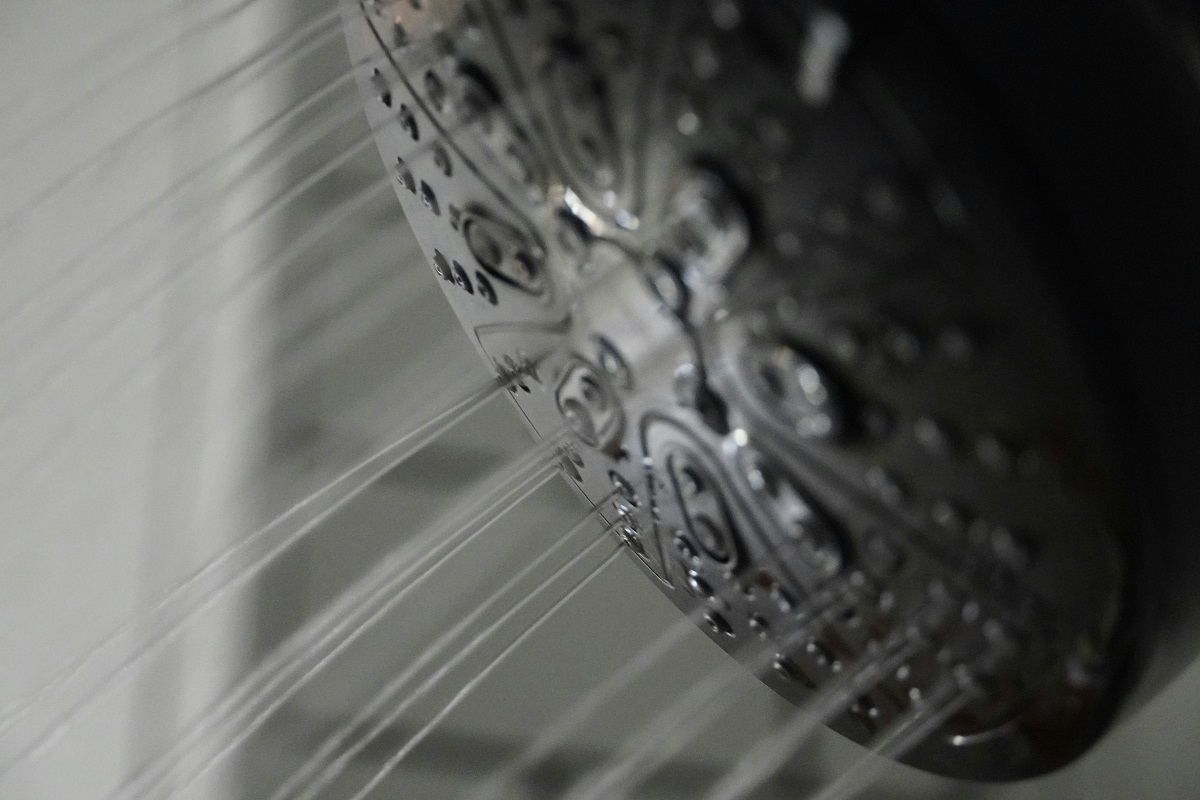
This is the most common culprit, and the easiest to fix. If you live in an area with hard water, calcium and magnesium deposits slowly build up inside the tiny nozzles of your showerhead. Over time, those little holes narrow or close entirely, and the water has to squeeze through whatever openings remain. You might notice that the spray looks uneven, with some jets shooting sideways or not working at all.
Here’s how to clean it without replacing anything:
- Unscrew the showerhead from the arm. Wrap a cloth around the connection first if you’re worried about scratching the finish.
- Fill a bowl or plastic bag with equal parts white vinegar and warm water.
- Submerge the showerhead, or secure the bag over it with a rubber band, and let it soak for at least an hour. Heavy buildup may call for overnight.
- Scrub the nozzles with an old toothbrush and poke any stubborn holes with a toothpick.
- Rinse thoroughly, wrap the threads with fresh plumber’s tape, and reattach.
If your showerhead is old, cracked, or permanently stained with scale, replacing it might be easier than cleaning it. A decent replacement costs very little, and some models are designed with rubber nozzles you can wipe clean with your thumb. While you’re at it, check the small filter screen where the showerhead connects to the arm. Sediment collects there too, and a quick rinse can restore a surprising amount of flow.
Cause 2: A Built-In Flow Restrictor
Since the 1990s, many showerheads in the United States and other countries have come with a flow restrictor, a small plastic or rubber disc that limits water use to around 2.5 gallons per minute or less. Newer models are often rated at 2.0 gallons per minute or lower. These devices save water and lower your utility bills, but they can also make your shower feel weaker than you’d like, especially if your household pressure is on the modest side.
If you recently installed a new showerhead and the pressure dropped, the restrictor is a prime suspect. You can usually find it by removing the showerhead and looking inside the connection point. It often looks like a small disc with a hole in the middle, sometimes color-coded.
You have a few options:
- Remove the restrictor with a small screwdriver or pliers. This will increase flow, but keep in mind it may go against local water-saving regulations in some areas, and it will raise your water usage.
- Swap in a high-pressure showerhead that’s engineered to feel powerful even at low flow rates. Many models use air induction or specialized spray patterns to create a forceful stream without using more water.
- Choose a showerhead with an adjustable spray setting so you can pick between a gentle mist and a strong pulse.
For most people, a well-designed high-pressure showerhead gives the best balance of comfort and efficiency.
Cause 3: Partially Closed Shut-Off Valves
Sometimes the problem is as simple as a valve that isn’t fully open. Your home has a main water shut-off valve, and individual fixtures often have their own shut-off valves too. If someone closed one partway during a repair or renovation and forgot to reopen it, you’d get reduced flow without any other obvious symptoms.
Start with the main shut-off valve, which is usually located near your water meter, in the basement, in a utility closet, or on an exterior wall where the water line enters the house. Gate valves have a round wheel handle, while ball valves have a lever. Make sure a gate valve is turned fully counterclockwise and that a ball valve’s lever runs parallel to the pipe, which means open.
Don’t forget the water meter valve, which is typically maintained by the utility company. If you suspect it’s partially closed, don’t touch it yourself. Call your water provider instead.
Also look for:
- A shut-off valve behind the shower access panel, if your tub or shower has one.
- Isolation valves near your water heater, which can restrict hot water if they’re only partly open.
- Older gate valves that have corroded internally and no longer open all the way, even when the handle is turned fully. These should be replaced, ideally with quarter-turn ball valves that are more reliable.
Checking valves takes just a few minutes, and when this turns out to be the cause, the fix is immediate and free.
Cause 4: A Failing Pressure Regulator
If your whole house suddenly has weak pressure, take a look at the pressure-reducing valve, often called a PRV or pressure regulator. This bell-shaped device usually sits near where the main water line enters your home. Its job is to bring high municipal pressure down to a safe level for your pipes and appliances. When it wears out, it can stick in a restrictive position and choke your flow far below what you should be getting.
Signs of a failing regulator include:
- Pressure that has dropped across every faucet and shower in the house
- Pressure that fluctuates wildly, going from weak to strong without explanation
- Banging or hammering sounds in the pipes
- Pressure readings on a gauge that are noticeably below 40 psi, even when your neighbors seem fine
Many regulators have an adjustment screw or bolt on top. Turning it clockwise generally increases pressure, and turning it counterclockwise decreases it. Make small adjustments, perhaps a quarter turn at a time, and recheck with your gauge after each change. Don’t push above 60 or 70 psi.
If adjusting doesn’t help, the regulator probably needs to be replaced. Most last somewhere between 10 and 15 years. Replacement is a job best left to a licensed plumber, since it involves cutting into your main supply line and it’s important to get the new valve set correctly.
Cause 5: Leaking or Corroded Pipes
Water follows the path of least resistance. If a pipe has a leak somewhere between your main line and your shower, a portion of your water is escaping before it ever reaches the showerhead. Even a small, slow leak can cause a noticeable drop in pressure, and it can also cause serious damage to your walls, ceilings, and floors over time.
Corrosion is a related problem, especially in older homes with galvanized steel pipes. Over decades, rust and mineral deposits build up on the inside of those pipes, narrowing the opening that water has to pass through. It’s a bit like arteries clogging up. No amount of cleaning the showerhead will help if the pipe itself has shrunk.
Watch for these warning signs:
- Damp spots, stains, or peeling paint on walls and ceilings
- A musty smell, or visible mold near plumbing
- Brown or rusty water, especially after the water has been sitting unused
- A water bill that has climbed without a change in usage
- The sound of running water when everything is turned off
One simple test is to shut off every fixture and appliance, then check your water meter. If the dial or digital readout is still moving, you have a leak somewhere. Finding it can be tricky, and repairs often require opening walls or replacing sections of pipe, so a professional is usually the right call. If your home has old galvanized plumbing, a repipe with copper or PEX may be the long-term answer.
Cause 6: A Worn Shower Valve or Cartridge
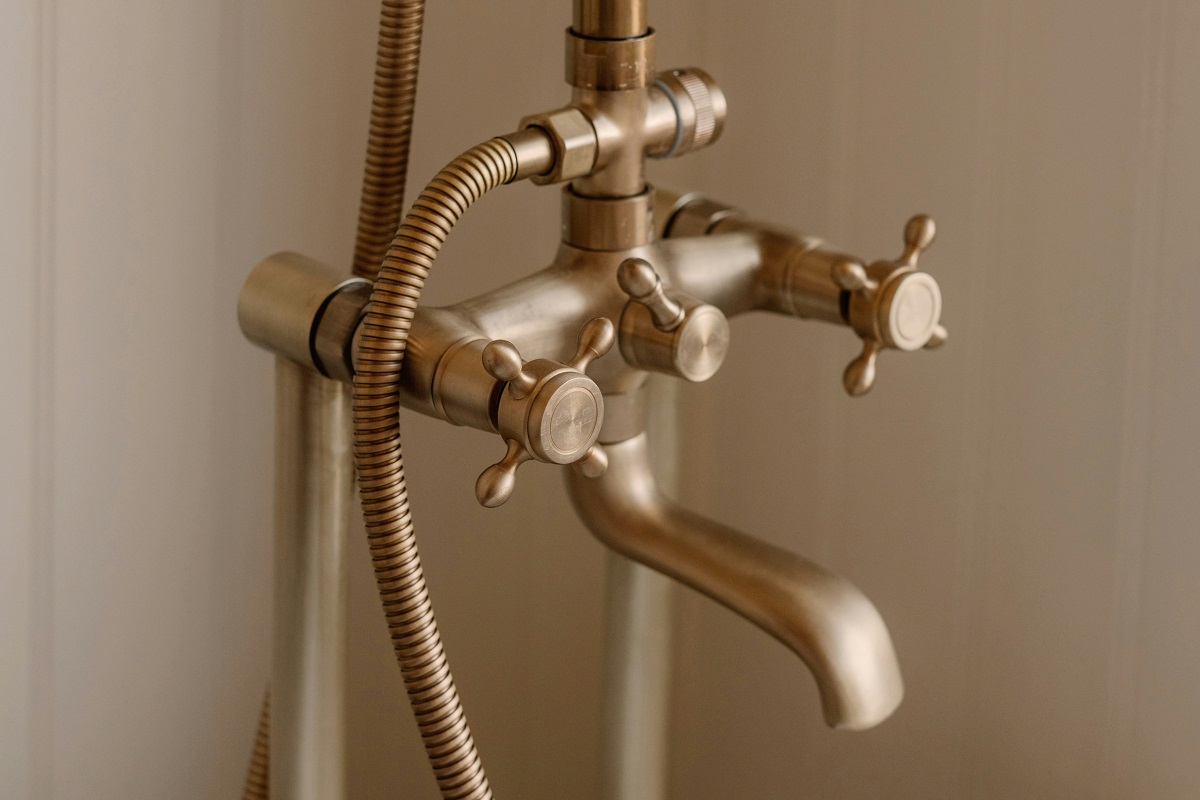
Behind your shower handle sits a valve or cartridge that controls both the volume and the temperature of the water. Over years of use, the internal parts wear out, collect mineral deposits, or get clogged with debris. When that happens, the valve may not open fully, which restricts the water reaching the showerhead no matter how far you turn the handle.
You may be dealing with a valve problem if:
- The pressure is weak in the shower but normal at the tub spout, or vice versa
- The handle feels stiff, loose, or gritty when you turn it
- The temperature is hard to control, or it swings between hot and cold
- Water drips from the showerhead even when it’s turned off
Replacing a cartridge is a manageable DIY project if you’re comfortable with basic tools. In general, you’ll need to shut off the water supply, remove the handle and trim plate, pull out the old cartridge with a puller or pliers, and install an exact match. Take the old one to the hardware store so you get the right size and brand, because cartridges are rarely interchangeable between manufacturers.
If your shower has a diverter, the part that sends water between the tub spout and the showerhead, a worn diverter can also bleed off pressure. Replacing it is usually inexpensive and straightforward.
Cause 7: Water Heater Problems or Supply Issues
Sometimes the problem has nothing to do with the shower itself. If your cold water pressure is strong but your hot water is weak, look at your water heater. Sediment builds up at the bottom of a tank over time, and in severe cases it can clog the outlet pipe and restrict hot water flow. A partially closed valve on the heater, or corroded fittings on top of the tank, can have the same effect.
Flushing your water heater once a year helps prevent this. To do it, turn off the power or gas, connect a garden hose to the drain valve at the bottom, and let the tank empty into a floor drain or outside. Open a hot tap somewhere in the house to let air in, and flush until the water runs clear. If you have a tankless heater, descaling it with a vinegar solution every year or so keeps the heat exchanger from clogging.
Then there’s the possibility that the problem is out of your hands. Municipal water systems sometimes experience low pressure because of:
- Peak demand during mornings and evenings
- Main line repairs or construction in your area
- Aging infrastructure or a broken main
- Seasonal spikes in use, such as summer lawn watering
Check with your neighbors or call your water utility to see if there’s a known issue. If it’s a widespread problem, there’s not much to do except wait. If low pressure is chronic, though, you may want to look into a booster pump, which uses electricity to increase the pressure in your home’s pipes.
A Quick Troubleshooting Checklist
When your shower pressure drops, it helps to work from the simplest and cheapest fixes to the more involved ones. Running through this list in order can save you time and money:
- Compare pressure at other faucets to see whether the issue is isolated to the shower.
- Remove and inspect the showerhead for clogs, scale, or a flow restrictor.
- Soak the showerhead in vinegar and clean the filter screen.
- Make sure the main shut-off valve and any local valves are fully open.
- Test your home’s water pressure with a gauge.
- Check for visible leaks, damp spots, or an unexplained spike in your water bill.
- Compare hot and cold water to rule out a water heater problem.
- Inspect or replace the shower cartridge or diverter if the problem persists.
If you’ve worked through all of these and the pressure is still disappointing, it’s probably time to bring in some help.
When It’s Time to Call a Professional
There’s a lot you can handle on your own, but some problems are better left to a licensed plumber. If you suspect a hidden leak, corroded main lines, or a failing regulator, calling a pro will usually save you money and stress in the long run. Mistakes with pipes and pressure can lead to flooding, water damage, or code violations that cost far more than the original repair.
Reliable plumbing solutions for everyday household problems often start with a simple diagnosis, and an experienced plumber can pinpoint the cause quickly using specialized tools such as pressure gauges, leak detectors, and even small cameras that inspect inside the pipes. That saves you from guessing and tearing into walls unnecessarily.
Consider making the call if:
- You’ve tried the basic fixes and nothing has changed
- Pressure is low throughout the entire house
- You notice water stains, mold, or a sudden jump in your water bill
- Your home has old galvanized or polybutylene pipes
- The pressure regulator or main shut-off valve needs replacement
- You’re uncomfortable working with your home’s main supply or water heater
When you hire someone, ask for an itemized estimate and get a second opinion for major jobs like repiping. A good plumber will explain what’s wrong, show you the damaged parts, and lay out your options instead of pushing the most expensive one.
Simple Habits to Keep Your Shower Pressure Strong
Once you’ve fixed the problem, a few small habits will help keep it from coming back. Preventive care takes only minutes and spares you the frustration of another weak shower down the road.
- Clean your showerhead every two to three months. A quick vinegar soak prevents mineral buildup before it becomes a problem.
- Install a showerhead filter if you have hard water. These filters reduce the minerals that cause clogs and can also help your skin and hair feel better.
- Flush your water heater annually. This clears sediment and extends the life of the tank.
- Exercise your shut-off valves. Turn them off and on once or twice a year so they don’t seize up.
- Consider a water softener. For homes with severe hard water, a whole-house softener protects your pipes, fixtures, and appliances.
- Keep an eye on your water bill. A sudden rise can be the first clue that you have a leak.
- Schedule a plumbing inspection every few years, especially in older homes. Catching corrosion early is far cheaper than dealing with a burst pipe.
These routines are low effort, but they add up. A little maintenance goes a long way toward protecting both your water pressure and your plumbing system.
Final Thoughts
A weak shower is more than an inconvenience. It can be a sign that something in your plumbing needs attention, whether it’s a harmless clog or a hidden leak that deserves a closer look. The encouraging part is that most causes are easy to identify once you know where to look, and many can be solved in an afternoon with basic tools and a bottle of vinegar.
Start with the simple stuff: clean the showerhead, check the valves, and compare pressure across your home. If those steps don’t do the trick, move on to the regulator, the cartridge, and your water heater. And when the problem points to hidden pipes or serious repairs, don’t hesitate to ask a professional for help. With a little patience and the right approach, you can get back to a steady, satisfying shower that actually feels like the reset button it’s supposed to be.
